

This year’s video of the game market, an analysis of “market polarization” that has been the subject of much debate in the media, including in the case of James Radar+, has recently been presented in a blog by a senior analyst of the market research company, Marc Piscatella. Matt Piscatla pointed out by a podcast from Kyle Bosman, Delayed Input, that one of the most significant changes in the game industry this year was the “K” economic polarization. He said that the 70-dollar 3-A game, like The Spirit of Goats, was supported by “rich” players, who were no longer buying new work at full cost, but went more to mobile and free games.
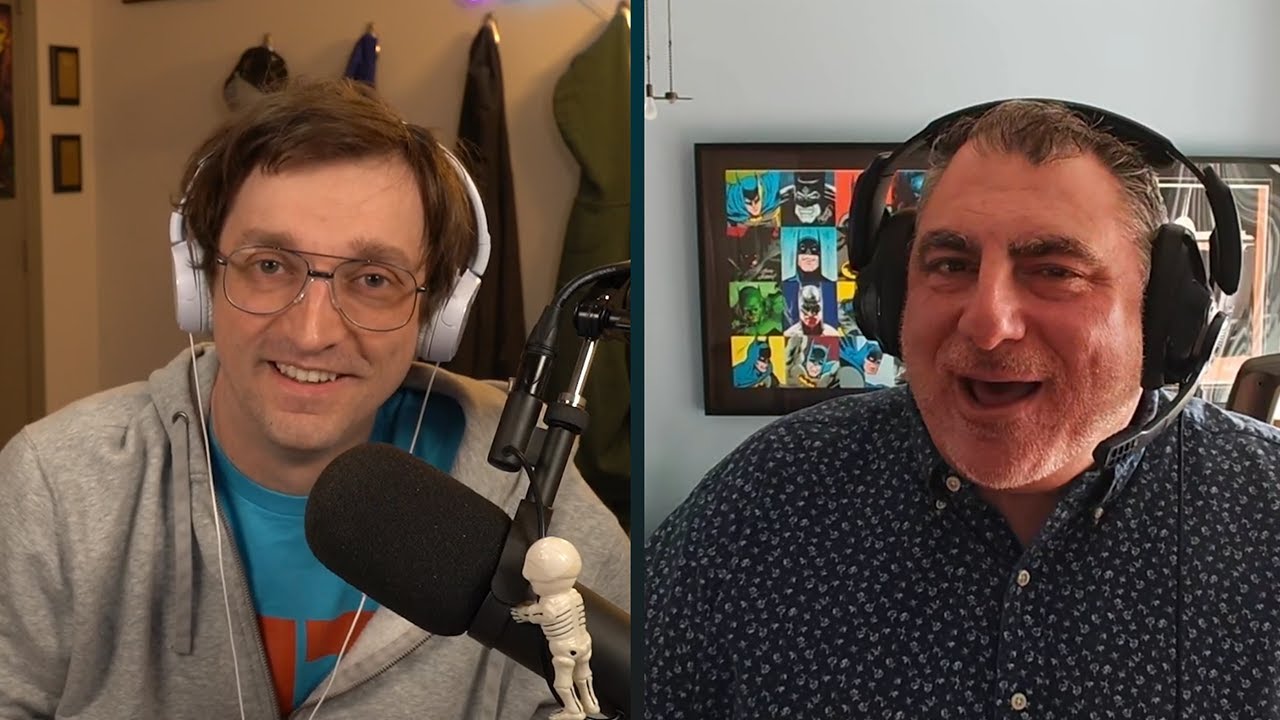
Matt Piscatla (right) and Kyle Bosman (left)
Despite a significant increase in daily spending in the United States a few months ago, the wealthy continue to consume as if they had not been affected by price volatility, and are still able to purchase full-price games without pressure, including the new Switch 2 and the PS 5 after the price increases. The group at the other end of the “K” economy faced difficulties even in purchasing food and paying rent, and consumption patterns changed dramatically.
According to the analyst: “As a result of market changes — especially the rise in the price of daily expenditure items such as food, housing, etc. … consumption patterns of different groups have emerged. The wealthier groups, which have more at their disposal, spend more and receive less, but are still consuming on a continuous basis because their economic position does not even allow them to detect price increases in a certain area.”

(Part of the industry and players claim to be worth $100 for GTA 6)
Matt Piscatla described some of these acts as “hidden inflation”, in which the rich tend not to be fully aware of or concerned about the rise in prices for commodities that are not often purchased, as he put it: “because they do not care about the cost, they do not detect changes in them”. On the other hand, those who are tired of living for their daily expenses are turning to free-service games such as Roblox, Fortress Night. According to Matt Piscatla ‘ s assumptions, such players are more likely to prefer subscription services such as Xbox Game Pass to reduce retail purchases, especially for high-priced games. It is clear that membership services such as Switch Online and PlayStation Plus in Nintendo have been growing steadily in recent years. In fact, Matt Piscatla had previously published data showing that only 14 per cent of users in the United States purchased at least one new game per month. At the same time, data also show that 63 per cent of users buy new games less than once every six months. At least in the United States, not all players have become “new game buys” habits.
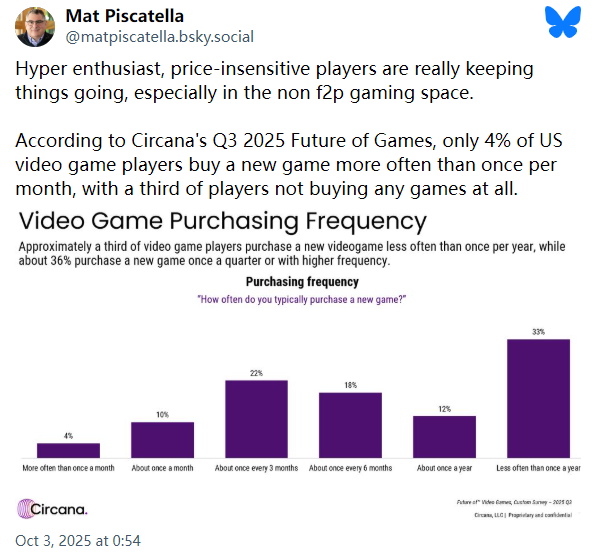
Matt Piscatla also cautioned that “hidden inflation” is particularly worrying in categories such as game hosts, which are expensive and less frequently purchased. He explained that when the purchaser was limited to “affluence not sensitive to prices”, “price rises and falls” were no longer taken into account. Citing the recent price hikes of the XGP, he expressed concern that a gradual increase in prices or “shrunk inflation” (i.e., reduced content but constant prices) might be difficult to detect. He also noted that if “hidden inflation” continued, the price of the game market might never return to normal. So far, the game hosts have experienced price adjustments and price reductions during their life cycle, but he believes that as “hidden inflation” spreads, the manufacturer may find it unnecessary to lower the price of the host. From a consumer perspective, this is likely to become the norm in the future. It is noteworthy that the polarization of this “K-type economy” does not exist only in the United States market, and Japan, one of the largest game markets in the world, faces a similar trend. According to a survey carried out by the Hike subsidiary Sarugakucho, 59 per cent of respondents have purchased only one to three games (including subscription services) over the past year and 21 per cent of players have purchased 4 to 6. In terms of annual consumption expenditures on games, 53 per cent of players spend less than 10,000 yen (approximately 458) and 27 per cent spend more than 1-30,000 yen, indicating that the Japanese market is also shrinking in the group of players who buy multi-dollar million yen full-price new players throughout the year.

Japan’s analysts warned that, while it was uncertain whether the “K-type economy” phenomenon had become fully apparent in the Japanese game market, Japan was also beset by the high prices that had led to the phenomenon. If this trend continues, there may also be a “player segmentation” in Japan, which has become an important issue for industry. Finally, as Kyle Bosman summed up in his show, “The rich are richer, the poor are poorer … The middle is disappearing.”