

Comic creation is a system project that goes from creativity to the end of content and involves multistage collaboration and many challenges. In traditional models, comic production is highly dependent on professional manpower, and process linear, complex and often lengthy and costly, so it has been a relatively small content carrier.
But with the rapid development of AIG technology, the production threshold and the time cost of comics can be significantly reduced through AIG intervention, and this year the form of comics has finally seen a full-blown outbreak.
In the face of this climate, many creators, while interested, do not know how to start. As a more “unknown” class, there are many questions in your minds: how should the comics begin? What do I need to do? What is the specific creative process? How does AI support the creation of comics? What kind of AI tools can we borrow?
Today, the DataEye Institute will introduce the whole process of creation of comics and the application of related tools, under the theme “Creating from 0 to 1” (with AI support), to provide a reference for creators who want to enter the comic field.
I. The comic book process
Take, for example, the comical creation process shared by the mega-engineer at the previous Comics River Congress.

It is clear from the flowchart presented that, if a novel or a real play were to be made into a comic, it would have to go through the whole process of developing from a script to a mix and a clip; and if it was to be based on existing cartoons, it would have to go to the market only by completing the three links: “Photo, action and effects, voice and clipping”.
At present, the most common types of comics are sand-sculptor/expression-packed comics, traditional comics, Ai-turned comics, game editor comics, etc. The different comics have different production processes and tool systems, and need to be clearly defined in order to determine the next steps.
What kind of subject or content would you like to make? What do you want to say? What kind of emotions do you want to pass on? …the answer to these questions and the kind of comics that we want to create is the direction we create.
ii. Sand sculptor / emoticon comics — new entry first
Sand sculptor/emotics comics are the simplest of any kind to produce compared to other comics, and they are essentially a combination of “persons’ material” and “situation material” with sound. Therefore, for the sand-sculptor/embracing comics, it is of the utmost importance to find the right material for the person and for the scene.
The source of the material is:
The simplest is the purchase of material packages, which can be bought in a particular fish, from a few cents to a few dollars, and can be bought on the basis of urban/gentle/psychological/history.
It is to find some free-of-charge resource sharing online. Finally, it is through software or tools that it produces material, which is generally created through special needs.
Sand sculptor/emotics comics are presented in a relatively simple manner, generally in the form of a fixed lens + role dialogue/byword. Common non-producer software meets the production requirements and the production requirements and levels are low.
The process of creating sand sculptures through AI is not particularly well controlled, and efficiency may not come quickly by hand. As a result, AI’s involvement in the creation of the Sandshawn/Assemic Comic was concentrated on pre-literate script adaptation, conversational voice/byword generation.
In response to the creation of a sand-sculptor/expression-packed comic, we need a “formulation” to determine the content of the creation and the progress of the production of the controlled content. The table generally includes “photo, action, case”. This “documentation chart” can be generated by informing AI of the modified content and needs (formatization).
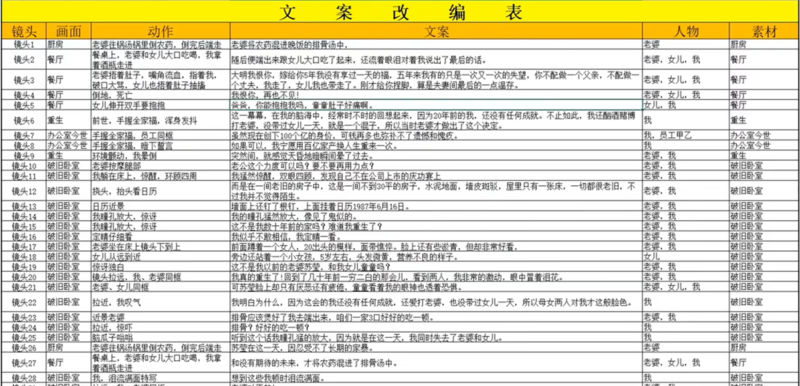
Once the “written form” has been established, the content of the “file” has been generated through the TTS tool, combined with the video, resulting in a complete sand sculptor/expression bag comic.
Although the picture appears to be rough, the content still has a wide audience, and according to data released by the shivering, as of August, the natural flow of the payment for the tremors had reached 10 million +/day and the peak of the commercialization of tremors had exceeded 4 million/day.
Taken together, the sand sculptor/embracing comics are relatively less difficult and costly in the creation of all comics and, with the help of AA-aided scripts and phonographs, make it possible for creators to enter and commercialize quickly. This is undoubtedly the starting point for new people to enter the world of comics, and it is well suited for new players who want to enter the comic.
The editor’s comic book – a very high creative ceiling
To a certain extent, the editor’s comics and the sculptor/emotic comics are somewhat similar: Sand sculptor/embracing comics are created through material packages, while the editor ‘ s comics are created through game editors and the material in them.
The so-called “play editor” is actually a video software that is officially developed and made available to game players for home-made animation and cut-off.
For example, the editor of the cyber game “Tai Song Image” ; the editor of the thunder-fire game “Faceless” ; and the editor of “Swordnet 3” , an animation editor.

Through the use of these editors, a wide range of material, such as scenes, roles, actions, etc., in the game can be easily and quickly obtained and an animated video can be produced using the functionality provided by the editor. Most editors provide very free camera functions, such as camera shuttles on maps, etc., and video manipulation and lens adjustment is very much left.
At the same time, however, it is limited to the material contained in its own editor, and there will be some limitations on the subject matter. For example, the various editors mentioned above tend to favour antiquated materials and content and cannot import external material, so the content of modern subject matter may not be adequate. At the same time, most official editors clearly state that “services are provided only to individual users and are prohibited for commercial use”, which poses a certain legal risk for comics that seek to commercialize.
If third-party material is to be used, a third-party common editor is required.
The use of a third-party editor requires the creation of a digital asset bank of its own, which has taken more time and effort in the upfront. Many of the current third-party editors also directly provide base templates, which, in addition to supporting material imports, have functions such as animation or particle effects.
The advantages of the editor’s comics are also very clear: high-precision material and a rich role manipulation dimension, while it is not constrained by the performance of actors and the possibility of a lens, which can achieve a very luxurious picture of action, a large view of super-manufacturing roles and a photolytic effect of change.
Taken together, the editor’s comic can achieve amazing visual performances at lower cost, achieve all kinds of creativity and ideas, and provide creators with an efficient and professional 3D content production method, an ideal option for combining creativity with technology.
Traditional Comics – Stable Content Fight!
“Traditional Comics” in this context refers to comics that are full narratives, created by comics or novels by a painter (hand or number) and can simply be understood as the replacement of characters and scenes of cartoons with real actors and scenes.
The script is very important if it is to be adapted from novels to traditional comics, and in addition to meeting the “conventional requirements for changing novels to short scripts”, there is a need to prepare in advance for the visualization of the next spectroscopy and content. In addition to character, conversation, profile, etc., there is a need for more detailed design and description of the behaviour and expression of the role, as well as a description of the scene, atmosphere, photo-effects, spectroscopy guidance (visibility, medium-view, periscope, feature), lens movement (push, pull, shake, move), role action/motion reference, face change, etc.
The content of the short opera script needs to be more comprehensive than that of the general short play, as a follow-up to the artist ‘ s step of producing spectroscopy scripts and cartoonization.
If cartoons are translated into traditional comics, the steps are relatively simple.
A complete comic can basically be seen as a collection of “the script + the spectroscopy scripts” and it is only necessary to dynamicate the above-mentioned on the basis of the cartoons.
AI can accelerate production almost on the whole process of the creation of traditional comics.
At this stage of the front script and the end of the spectroscopy, through AI’s “Vinnamian” tool, it can quickly help us to transform the novel into a script and spectroscopy script suitable for comics; and at the medium-term spectroscopy production, drafts, and threads colouring, AI can help us do the steps directly.
In the later stages of image/video generation, it is the strength of AI:
One, with the help of the “Vanctuary” can quickly create an image of the person that is in line with our imagination, and complete the image of the character by generating a three-view + feature; at the same time, it can also produce pictures as materials to determine the style and tone of the entire comic, based on the author’s description, and fix the background and scene maps of some of the main scenes. The Spectrograph is the basis of the behind Spectrograph, and when the Spectrograph is finalized, we can go into the steps of producing the video with the Spectrograph.
Two, the “Turson Video” AI model can be used to help us generate final video content. The efficiency of completion at this stage depends on the quality of the hints and “lucky”, and perhaps the desired video will be available at once, perhaps many times. This phase requires patience and continuous experimentation.
Having obtained a satisfactory number of video clips (normally 5-10 seconds), we need to link all video clips to a full story through the editing software. At the same time, the role of the person is played and the sound and video is matched (including background music, special effects, environmental sound, etc.).
That’s the process that we’ve been working with AI to generate traditional comics. The process involves a combination of AI tools working together, requiring creators to have a more skilled operational and in-depth understanding of AI tools. But in any case, AI is, to a great extent, the productivity of the enabling comics, which should also be the most accessible one.
IA Turnover Comics – Uncertain market prospects
AI turns comics, which essentially translate reality shorts into comic-style comics.
This form is often used to “retrofit” reality shorts that do not satisfy the needs of current audiences, thus creating the possibility of “retro-profits”.
The ideal state of people for the Ai to turn the opera is, of course, to upload the whole set of short plays once and then set it up for what kind of painting, and then to convert and export it.
At present, however, the available tools are not yet in a position to do so, requiring manual intervention and extensive intervention; and the effect of the conversion of existing tools is not stable, often leading to a backlash in the vagueness of “classes” and “classics”, often with the embarrassing effect of “neither real nor comics”.
At the same time, the actual cost and difficulty of making these kind of comics is much higher than many would have expected, and that’s why the “real man” comics are made. Soon after a short rise, it was a cause of calm, so it was not recommended in that direction.
VI. ADVANTAGE DIRECTION OF AID-FRIEND Comic
The AI tool was the most helpful and supportive of the outbreak. To create comics in an efficient and cost-effective manner, the use of AI for supporting creation is essential.
In the creation of comics, we need to use all of the AI tools that are used in a variety of functions, such as Vincent’s, Vincent’s, Tusheng’s, TTS, Vincent’s.
The DataEye Institute summarized some of the better evaluated AI tools currently available on the market for use in the creation of comics. Each tool has its own style and characteristics, and it is possible for all to choose according to their needs after a trial.

Comics are undoubtedly the most explosive in the field this year.
Whether the policies of the major platforms are tilted and the flow increased, or whether there is a proliferation of products coming in or increasing their input into the comic strip, there is a clear trend – – Comics are becoming one of the ecological components of short play content.
However, there are still a number of risks that need attention:
1. Instability of AI: Whether it’s a “Vanctuary” or a “Tuctuary Video”, the results of AI generation are somewhat random. The current quality of AGC output depends to a large extent on the precision of the hint (Prompt) and still requires a large number of “tick cards” to obtain the desired results, which may be more than expected in real monetary and time costs.
Copyright Legal Risks: At present, there is no clear conclusion as to the attribution of copyright rights to the content generated by AI; at the same time, we need to face the issue of copyright attribution when we use “materials” to create, which poses a potential legal risk to the commercialization of comics.
3. Regulatory audit risks: The Management Alert (Animated Micro-Sync) issued by the General Directorate of Radio and Television on 8 September contains clear requirements for the review of the content of the comics, and some of the dramas that are common (in terms of terror, pornography, lacquers, etc.) may be at risk of being put on the shelf.
It’s not easy to “slept and win”, though it’s big. AI is only a supporting tool, and at the heart of its content is human creativity and aesthetics. How to use AI efficiently while avoiding risks and building their own core strengths in content creativity, brand style or operational efficiency is a matter for every entry point. The DataEye Institute continues to appreciate the potential of the cartoon market for future development.
With the short videoization and fragmentation of user reading and viewing habits, the cartoons, which combine the shock and drama tension, are expected to become the mainstream choice for the next generation of content consumption. Their relatively manageable production costs, shorter cycles, multi-end distribution of appropriate characteristics also provide greater flexibility and possibilities for content creators.
In the future, the combination of AI+ comics will reshape the way the short play is created and consumed. This is an opportunity for innovators and deserves to be invested.